


How to Properly Winterize a Pool?
Winterizing the pool is an important step in preparing for the winter season, which helps protect the pool from the damaging effects of frost and snow. Properly winterizing the pool ensures that the water does not spoil and makes it easier to get the pool up and running in the spring. Below are the steps on when and how to winterize your pool.
When to Winterize the Pool?
The ideal time to winterize the pool depends on the climatic conditions in your area. In general, you should start preparing to winterize the pool a few weeks before the first frosts are expected. Ideally, when the water temperature is between +5 and +10°C. Most people winterize their pools during the fall, typically in October or November.
If the pool is winterized too quickly, while the water temperature is still above +10°C, algae and other microorganisms can start to multiply in the water. When you open the pool in the spring, you might be surprised by green water. Cleaning it or possibly refilling the pool can be costly.
How to Winterize a Pool?
- Pool Cleaning
Start by thoroughly cleaning the pool. Remove any leaves and debris that have accumulated on the water surface. Vacuum the sediments from the bottom and walls, then flush the sand in the filtration system and clean the skimmer basket.
- Adjust the Water
Before winterizing, it’s important to check the chemical balance of the water. Test the pH and chlorine levels. Ensure these values are within the optimal range. You can find the recommended values in our article „How to Keep Pool Water Clean Throughout the Summer.“
- Lower the Water Level
To prevent damage from freezing, lower the water level below the level of the jets (preferably 10 cm below them) or to the level recommended by the manufacturer. Use a submersible pump to drain the water if necessary.
- Disconnect Equipment
Disconnect all pool equipment such as the filtration system, pump, jets, lighting, etc. Clean and store them in a dry and safe place where it won’t freeze. If your equipment is located in a well or room that doesn’t freeze, simply drain the water from the filtration system and pipes.
- For pipes that are sloped, simply drain all the water (from the lowest point) and leave the valve open to allow the pipes to dry.
For pipes that are not sloped, you need to vacuum the water (using a wet vacuum) or blow the water out. - Prepare the Jets
If your pool jets have winterizing covers, put them on. These covers prevent water from entering the jets and freezing, which could cause damage.
- Add Winterizing Chemicals
Add winterizing chemicals to the pool according to the manufacturer’s instructions. These products help protect the pool water until the spring opening.
- Expansion Floats
It is advisable to add expansion floats to the pool, which absorb the stress caused by the ice. Install them diagonally across the pool.
- Cover the Pool
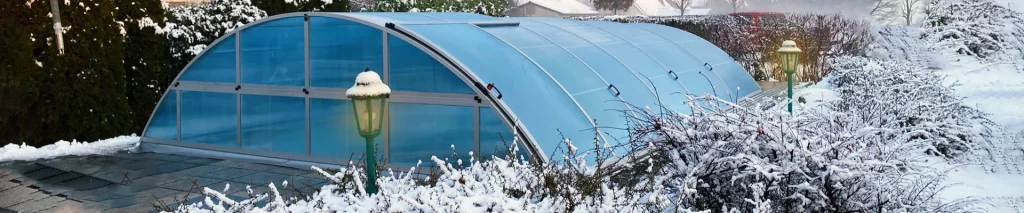
Use a pool cover or pool shelter to prevent debris from accumulating in the pool.
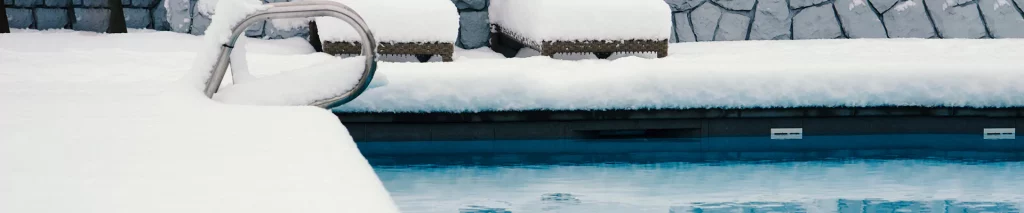
- If your pool is not covered, remember to regularly monitor the water level to ensure it doesn’t reach the jets or potentially enter the skimmer.
- If your pool is covered with a tarp or a shelter, don’t forget to regularly remove large layers of snow to prevent damage to the structure or the tarp.
When winterizing the pool, it is important to proceed carefully and follow the recommendations from the pool equipment manufacturer. Proper winterization will save you a lot of trouble and ensure that your pool will be in good condition for the next season.