


How to Keep Your Pool Water Clean All Summer
A pool is a great way to cool off and enjoy your free time during the summer months. To make your pool experience as enjoyable as possible, it is essential to keep the water clean and clear. Proper water maintenance is crucial to ensure a safe and pleasant swimming environment. In this article, we bring you useful tips on how to keep your pool water safe and hygienic.
Proper Water Filtration Is Important
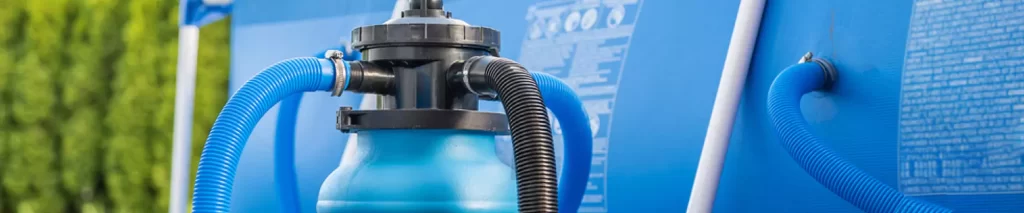
Water filtration is one of the most important steps in maintaining clean pool water. The filtration system should filter the entire pool at least twice a day. We recommend setting the filtration to run in multiple time intervals, with a total runtime of at least 8 hours per day.
If you do not yet have a pool cover to prevent debris, such as leaves and insects, from falling into the water, be sure to regularly clean and inspect the filter to remove debris and avoid overloading your pump.
If you have a sand filter, we recommend backwashing the sand weekly to flush out any fine sediment. The sand should be replaced every two years.
You definitely won’t go wrong if you run the filtration system more frequently, especially on days with prolonged high temperatures. It’s not worth saving on filtration runtime, as fixing water issues with chemicals can cost more than the savings from reduced filtration usage.
Another crucial aspect is maintaining the correct water level in the pool to ensure proper skimmer operation. This is particularly important on hot days when water evaporates the most or during sand filter backwashing. Using a pool cover can help reduce water evaporation.
Regular cleaning of the pool floor, walls, and skimmer basket.
Use a pool vacuum or automatic cleaner to remove debris that has settled on the floor and walls of the pool. Regular cleaning prevents algae formation and stops debris from accumulating at the bottom of the pool. Also, clean the skimmer basket, where larger debris collects before entering the filtration system.
Types of Vacuums:
- Manual/Mechanical Vacuum: One of the most commonly used and affordable options for cleaning. It consists of a brush connected to the filtration system via a telescopic pole.
- Semi-Automatic Vacuum: This vacuum automatically cleans your pool by attaching itself to the pool walls with suction. It is connected to sand filtration. The advantage is time-saving.
- Automatic Vacuum: This vacuum operates almost independently. A significant advantage is that it has its own filtration basket for collecting debris and can map the pool area. It may also have various cleaning programs.
When using sand filtration, don’t forget to backwash the sand after using the vacuum connected to the filtration system.

Chemical maintenance and minimizing its use.
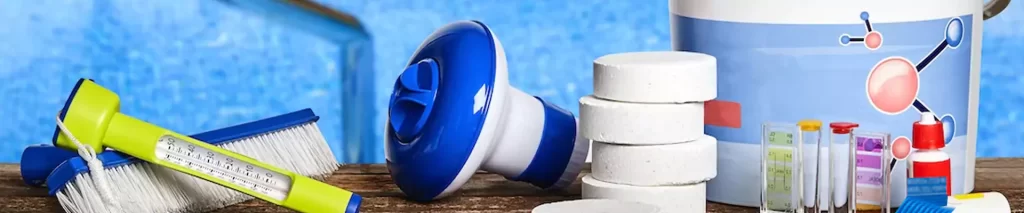
Proper pH level setting in the pool is an essential part of pool water maintenance. The pH of the water should be between 7.2 and 7.6, which is ideal for comfortable and safe use of the water. You can check the pH level using a tester, which can be purchased at any pool accessories store. It may happen, due to extreme heat, storms, or when the pool is used by many people at once, that the water turns green. In such cases, the „Chlor Shock“ product can help, which temporarily increases the chlorine level to remove algae and bacteria. For sensitive skin, it is recommended not to swim in the pool for two days due to the increased chlorine. The proper chlorine level in the water should be between 0.4 – 1 mg/L, which you can check with a tester. To maintain clean water, Multi 5-in-1 tablets have worked best for us. If the water smells of chlorine and the tester shows the correct values, this is known as „bound chlorine“ (which is created by sweat, creams, or sunscreen oils). In this case, „Chlor Shock“ will also help. To remove light cloudiness, use a flocculant.
Always read the instructions on the pool chemicals purchased, which are provided on the packaging.
For carefree maintenance of clean water and proper values, we recommend covering the pool, which will limit the entry of debris into the pool. It is also advisable not to use creams or oils before swimming in the pool, and if you do, it is a good idea to rinse off before entering.
We wish you carefree enjoyment of your pool throughout the entire swimming season.